87% of executives know they need to prepare for technology disruption. But only 44% are doing something about it. *MIT SMR Digital Business Research
We started 2020 knowing our plans but this year brought unprecedented change. Every business had to rapidly adapt to remote working and disrupted supply chains. For those business that thrived, technology was a key enabler. Knowing how technology can drive your business is table-stakes. Looking ahead to 2021, here are my predictions on technology trends that will impact business most and I’ll wrap up on why knowing trends is not enough.
My Technology Trend Predictions for 2021:
1. Cloud

If you do one thing in 2021, take advantage of Cloud. It’s becoming the foundation of all businesses. Cloud journeys start with Google Workplace or Office365 and can quickly expand to automating management of servers, cheaper data storage and pay-per-use innovation such as Machine learning and automation.
2. Application Programming Interfaces (APIs)
As more software and services move to the cloud, this increases the need to integrate data. Management teams now expect dashboard reports on operations or financial performance that pull data from your ERP, production and HR systems. Pulling this data together from different systems is enabled by APIs.
3. Data analytics
As leaders demand more insights from dashboard reports, you need to unlock the value of your data and make better decisions, faster. Data analytics tools like R, Python, Tableau and Excel are key enablers of data analytics.
4. IoT
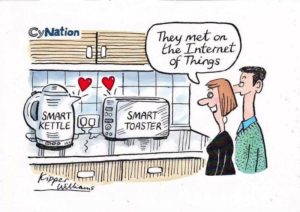
WiFi enabled ‘things’ connected to the internet are everywhere. We can now take 1000’s of measurements per second on everything from machine temperatures to customer spending habits. IoT devices are key to fuelling your data analytics and Machine Learning (see below).
5. Automation
Where’s the highest bang for your buck? Automation. It’s a low risk, high impact solution for streamlining business process and reducing cost. Start with any process that involves filling in paper forms or has multiple approvals. Quick win areas include Employee onboarding and purchase order processing.
6. Machine Learning
Machine Learning (a subset of AI) supercharges your automation and provides the next level of business insights. How? ML looks for patterns in data and provides recommendations. Examples include optimizing route planning for field inspections, alerts on potential machinery failure and fraud detection on invoices.
7. Cybersecurity
As technology advances and adoption rises, hackers have become more sophisticated in exploiting our weak points. Threat detection and response is more important than ever. Focus on preventing malware and ransomware, securing your attack surfaces, and eliminating attacker dwell.
Other technologies such as 5G, blockchain, VR, digital twin will gain traction in 2021 but these technologies need more time to mature and I see less direct business impact in the next 12 months.
Here’s the kicker, I see many organizations good at knowing but struggling with the doing.
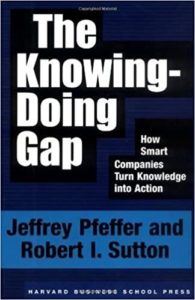
First identified 20 years ago by Pfeffer and Sutton, The Knowing-Doing Gap shows how it’s not enough to know technology trends, it’s doing something about it. So instead of asking if you should bring in ML or increase Cloud presence, ask yourself ‘How can I use technology to achieve my business goals?’.
You need to become what Professor Steven Spear calls a “high-velocity organization”.
You need to be an organization that that’s always improving, using an agile culture and providing training and resources for your teams to implement technology efficiently.
The evolution of technology continues to grow rapidly so it’s crucial to not only stay informed on technology trends but more importantly, support your team’s in adapting and leveraging technology. Because when there’s a crisis or a strategic imperative to respond, it’s often too late.